
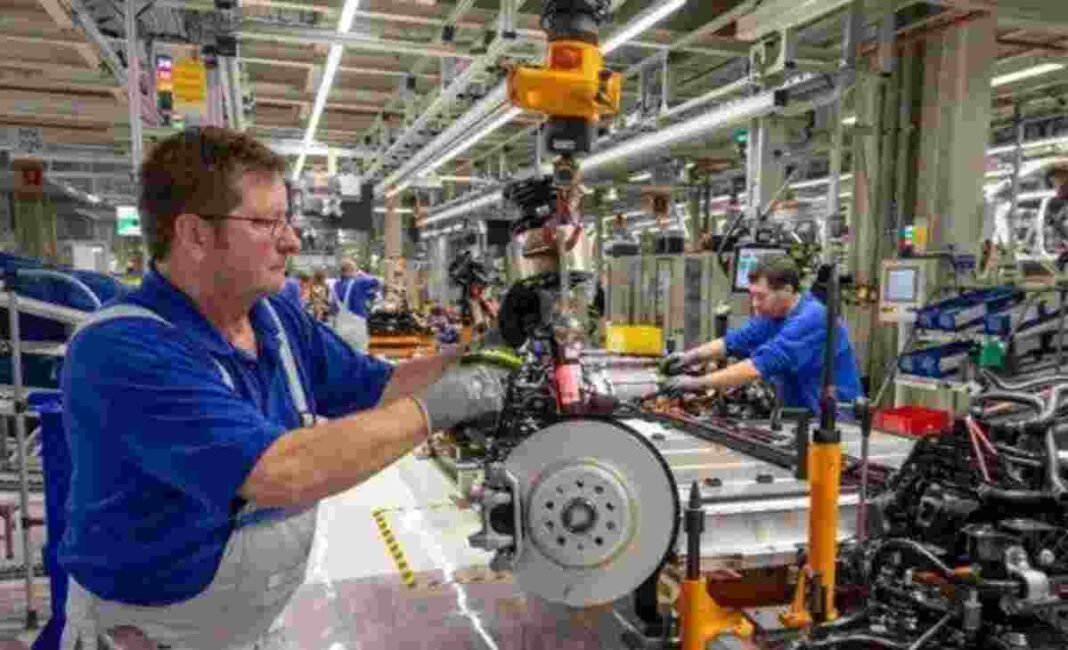

Some of Germany’s top industrialists are beginning to challenge one of the country’s traditional practices. After years of weak productivity growth, intense international competition and rising costs, the bosses of big firms such as Mercedes-Benz have demanded a 40-hour week, with no extra pay. And the move has sparked a wider debate about how Europe’s biggest economy can beat its industrial decline. For more than thirty years many manufacturing workers in Germany have been covered by collective agreements that determined a working week of about 35 hours. The system was once lauded as a rare tradeoff that combined high productivity with a good quality of life. Now some employers are trying to characterize the very same system as a competitive liability. Manufacturing labour, at an average cost of nearly 49.
50 per hour, is A lot more expensive in Germany than in the European Union in total by some 50percent and is more than three times the cost in lower-wage member states like Hungary. Per business leaders, that gap has knocked out the competitiveness what made Germany’s industrial base so successful. The chair of Mercedes-Benz supervisory board, Martin Brudermller, has recently declared that labour in Germany has become too costly relative to the rest of the world and that Germany has lost its productivity edge over a number of major competitors. He is calling for a serious relaxation of the working time regulation and for a comeback of the 40-hour week.
This opinion also has been clearly expressed by the leading managers of other manufacturing companies. The argument seems simple: working longer hours for the same monthly wages would lower the average cost of production and might provide much-needed scope for maneuver in the increasingly competitive global environment. The timing is no coincidence.
German industry has faced a long-term challenge from Chinese imports, high energy prices, and increasingly volatile demand in core sectors including automobiles and engineering. Wage negotiations between industrial unions and employers are scheduled to start in autumn, offering an institution in which to air the issue. Union representatives have been on the defensive. While ruling out a blanket rollback of hard-fought standards, some have been open to company-by-company negotiated solutions for perpetually-in-trouble firms.
An IG Metall official observed that ‘applications for the Classic Model (35-hour week) are less widespread than the public dialogue would suggest’, and that ‘in many situations, customized solutions already exist’. Economists note still that merely reducing the hours of work from 35 to 40 without a pay rise would lead to a rise in hours of work of some 14 percent; this is a cost rise of a very considerable order to firms. For workers, that would mean hundreds of extra hours of work each year for the same paycheck.
The human aspect of this in my view was not lost on workers or their representatives. To many, the 35-hour week is the great achievement of the German social model. It gave people a chance to escape the conflicting demands of industrial work and family life and leisure, and a lot of people don’t want to return to that state of affairs after years of corporate record profits and high wages. All the same, these figures cannot be dismissed. The German manufacturing sector has been finding it difficult to protect its erstwhile primacy.Output growth has not kept up, investment decisions have been moving in directions where costs are cheaper, and unemployment has started to increase after years of strength.